
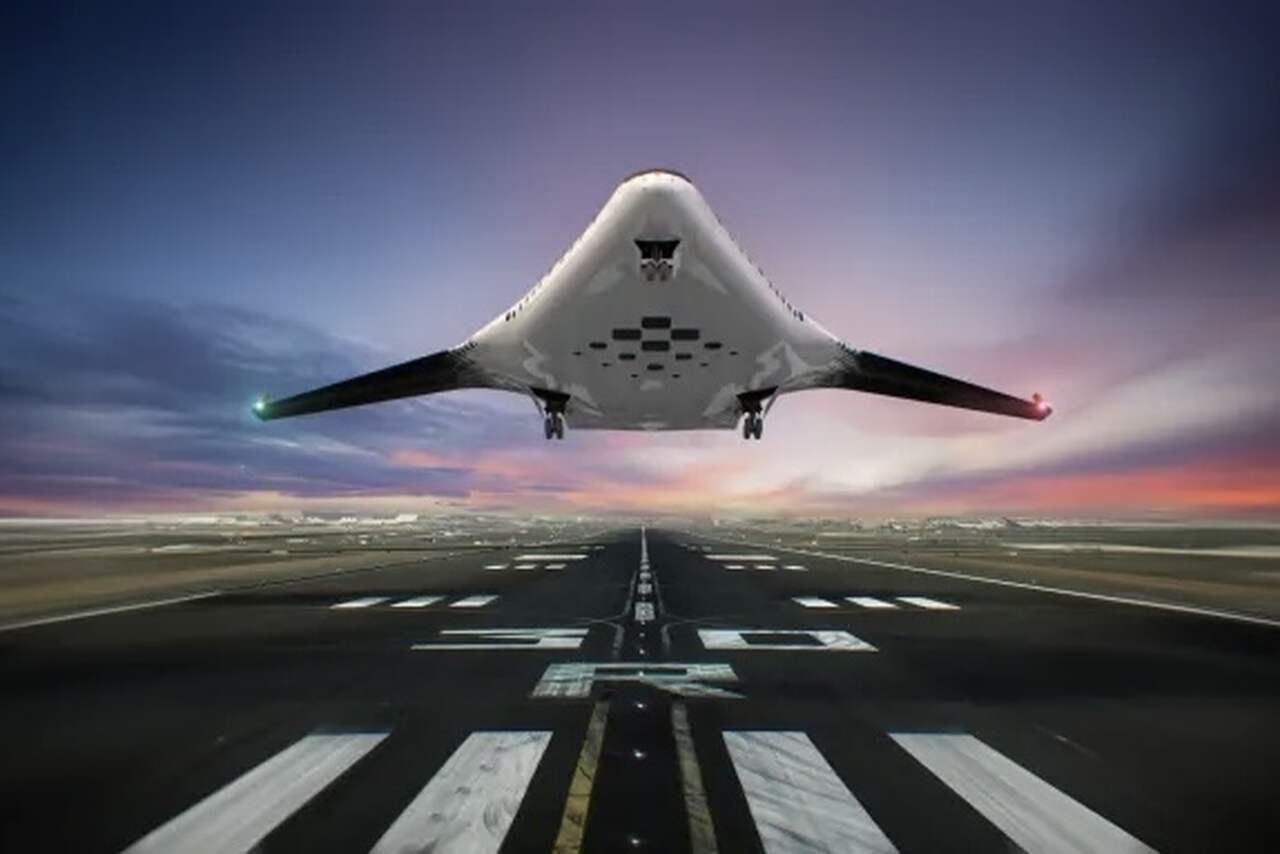
Natilus, an American aviation company, unveiled the Horizon, a futuristic aircraft that promises to revolutionize the market.
With growing concerns over fuel consumption, the Horizon comes as an alternative to current Boeing 737 and Airbus A320 models.
Designed to carry around 200 passengers, the Horizon operates with half the emissions and uses 30% less fuel than the aircraft it aims to compete with.
“The narrow-body aircraft market, which is exactly where the Horizon fits, will be the largest market over the next 20 years,” said Aleksey Matyushev, CEO and co-founder of Natilus, to CNN.
“With all the challenges the industry is facing, for the first time in history, I believe there is an opportunity to build an airplane similar (or equivalent) to a Boeing or Airbus.”
According to Matyushev, the blended-wing design originated in the 1990s, developed by McDonnell Douglas, a major American aerospace manufacturer that merged with Boeing in 1997.
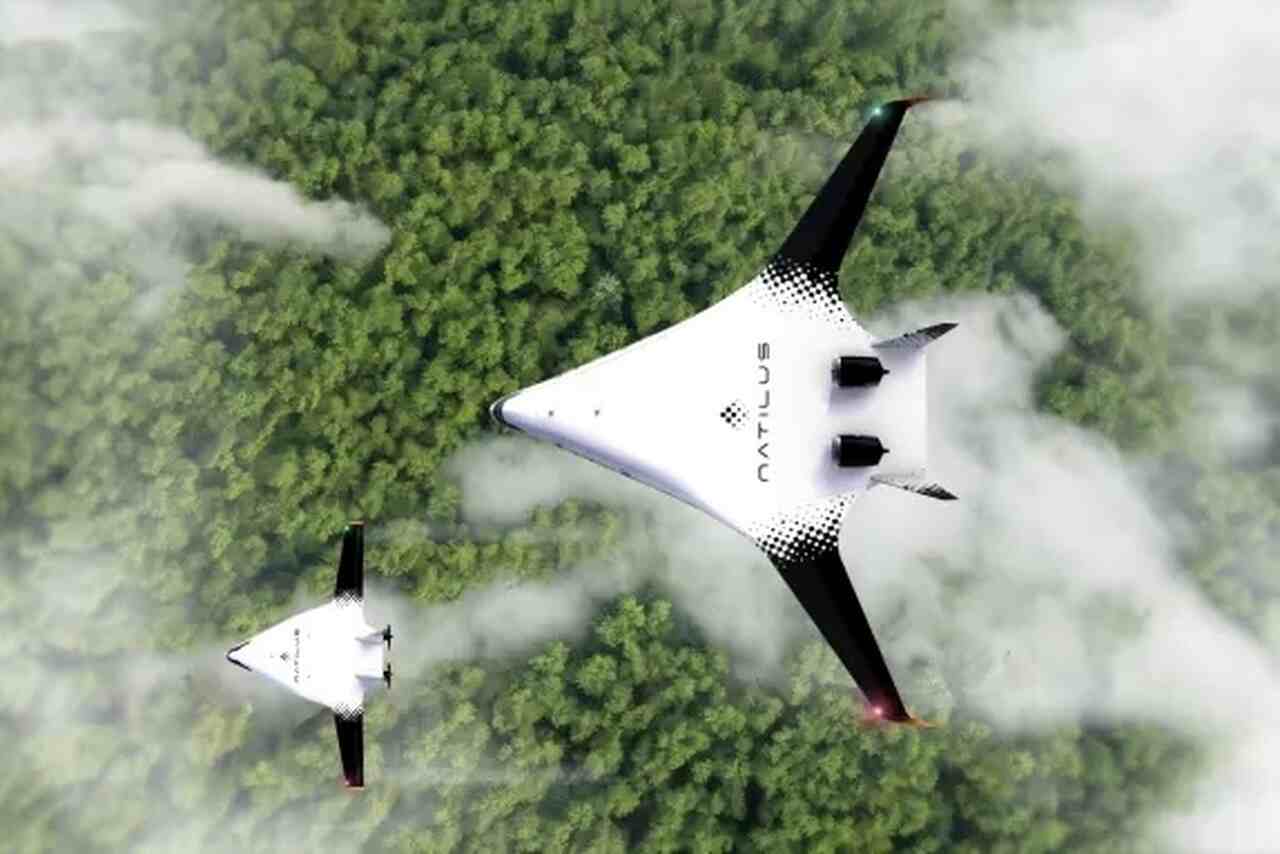
However, despite studying the concept, Boeing never commercialized such an aircraft. “One of the challenges of a blended-wing design is stability and control. I think that’s where McDonnell Douglas and Boeing really stumbled: how to stabilize the aircraft?” he explained.
One way to achieve stabilization, according to him, is through complex flight control systems. In this case, computers, which caused problems with the Boeing 737 Max, Matyushev said.
The other option is aerodynamics, which was the path chosen by Natilus. This new shape brings some crucial advantages, according to Matyushev.
“There’s a 30% reduction in drag, but at the same time, it’s possible to reduce the aircraft’s weight while accommodating the same number of passengers or cargo, which is quite unique,” he said.
“With a smaller aircraft, you have smaller engines that consume less fuel. So, when you combine the two, you start to see about a 50% reduction in emissions per passenger seat.”
Additionally, the unique shape provided by the wider fuselage also offers a range of onboard layout possibilities. “We have about 30% more interior space than a traditional airplane,” Matyushev explained.
“So, what I think many of our customers are considering is an enhanced passenger experience. Could you reopen the lounge? Are there other spaces on the aircraft that could be adapted for long flights?”
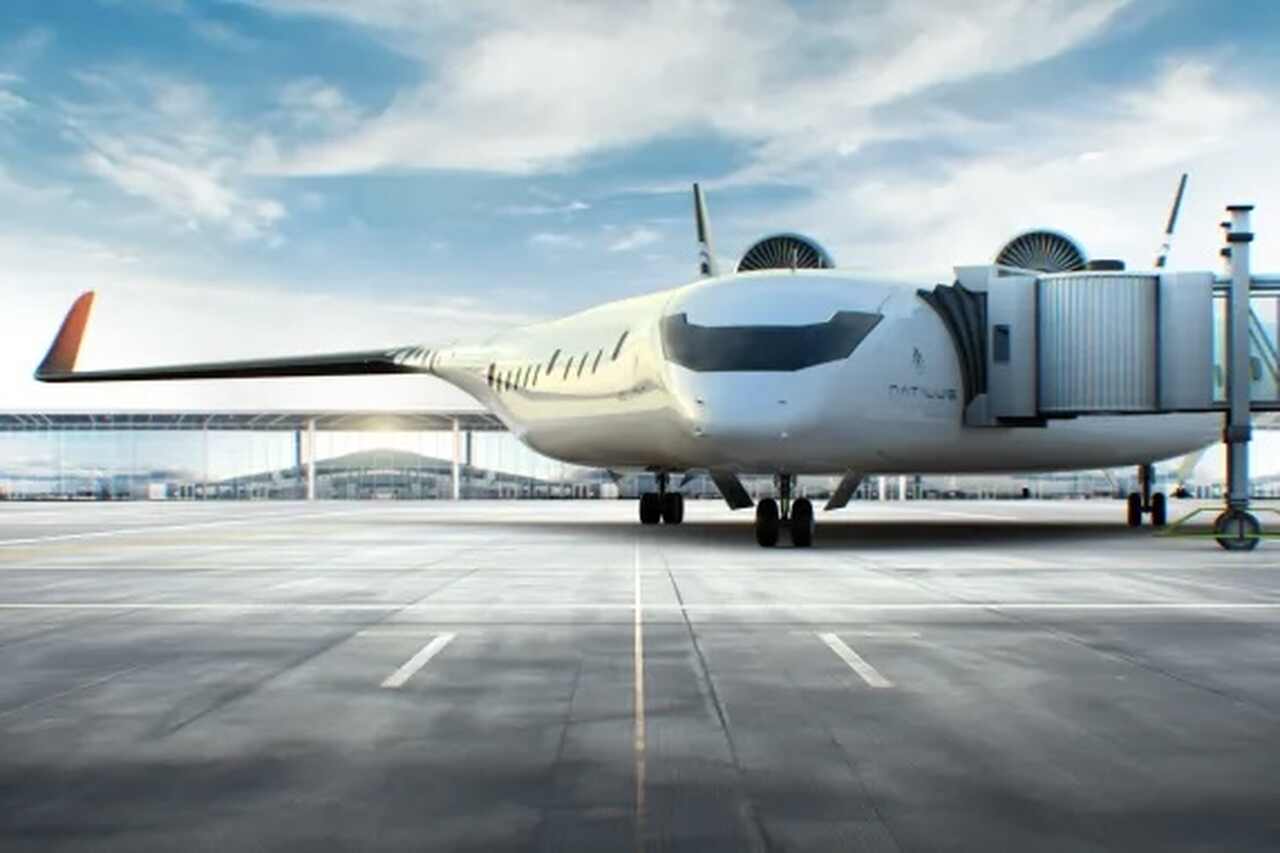
It is worth noting that, despite its unique shape, the Horizon is designed to fit anywhere a Boeing 737 or Airbus A320 would fit, without requiring any changes to airport infrastructure.
However, the aircraft will not introduce innovations in engine technology, excluding electric or hydrogen options. “Never put a new engine on a new aircraft. That’s very risky,” Matyushev argued.
Currently, Natilus is working on a full-scale prototype of the Horizon, and the project is expected to move forward by 2030, though experts noted the company could face challenges obtaining the necessary certifications for the Horizon with aviation authorities.
“The challenge for any completely new project has always been the enormous upfront cost to develop and certify it,” explained Gary Crichlow, aviation analyst at Aviation News Limited.
He noted that even conventional models like the Boeing 737 Max and 777-X, the Airbus A321neo XLR, and the Comac C919 are facing “significant regulatory delays compared to their original manufacturer schedules.”
“With a design as different as the blended-wing fuselage, I would expect regulators to be even more cautious,” added Crichlow.
Photos: Natilus. This content was created with the help of AI and reviewed by the editorial team.
